Showing posts with label New technology. Show all posts

Tuesday, July 28, 2015

Sri Lanka to be the first country to have universal internet access with Google Loon


Sri Lanka’s government and Google on Tuesday signed an agreement to cover the Island with 3G internet under ‘Google Loon project’.

Sri Lanka is the first country in the world to have Internet access covering the whole country with the government support, Google Vice President and Project Leader on GoogleX Project Loon, Mike Cassidy said.

Project Loon is the latest moonshot from Google[x]: balloon-powered Internet access.

It is a network of balloons traveling on the edge of space, designed to connect people in rural and remote areas, help fill in coverage gaps and bring people back online after disasters.

“With our system we use LTE which is a common protocol most of the telcos use around the world. So anyone with a smart phone would be able to get internet access. One of the key things we do is we partner with the local telcos. In New Zealand we partnered with Vodafone.” Cassidy said.

It is expected to place 13 balloons above Sri Lanka over the next few months (One balloon is expected to last over 100 days) and internet service providers will have to connect this network through these ‘floating towers’ which will ultimately reduce their transmission costs.

“Matara covered or Jaffna covered is now history. In a few months we will be able to say Sri Lanka covered,” addressing the signing ceremony Foreign, Telecommunications and IT Minister Mangala Samaraweera said.

“As a result of this agreement, the entire Sri Lankan island – every village from Dondra to Point Pedro – will be covered with affordable high speed internet using Google Loon’s balloon technology.” Samaraweera said.

The project is handled by ICTA with the collaboration of former Facebook executive Chamath Palihapitiya who now represents lotus flare, a leading mobile content provider.


Visit Us : @ Hyperjet

Tuesday, July 21, 2015

Apple iCar Looking Even More Likely


Rumours of the Apple iCar have been sparked once again as reports show that Apple has roped in the head of operations at Chrysler to work on an electric ‘iCar Project’ to rival Tesla.
Apple’s list of car specialists just keeps getting bigger with the tech giant hiring Doug Betts, ex-head of global operations at Fiat Chrysler automobiles.
Betts has now changed his job status to “operations-Apple”.
Although pretty cryptic, we can only guess that Betts has joined Apple to work on a car project.
Since February of this year, reports of several hundred employees working on an Apple-branded eclectic car shot into public attention.
Other employees of Apple’s new project include the head of research and development of Mercedes-Benz North American Lab.
It's no wonder everyone is flocking to Apple, as according to Bloomberg, Apple is offering $250,000 signing bonuses with gigantic salary hikes.
Unfortunately we still have no idea what the iCar will look like or any of its features as Apple is keeping things very much behind closed doors.
But with Betts in Apple’s corner and their specialist team getting bigger, hopefully it won't be long before we see the fruits of their labour.
Interested in the Apple Car? Read everything we know about the project here.


Visit Us : @ Hyperjet


Monday, March 23, 2015

A Fully Transparent Solar Cell that Could Make Every Window and Screen a Power Source


Researchers at Michigan State University have created a fully transparent solar concentrator, which could turn any window or sheet of glass (like your smartphone’s screen) into a photovoltaic solar cell. Unlike other “transparent” solar cells that we’ve reported on in the past, this one really is transparent, as you can see in the photos throughout this story. According to Richard Lunt, who led the research, the team are confident that the transparent solar panels can be efficiently deployed in a wide range of settings, from “tall buildings with lots of windows or any kind of mobile device that demands high aesthetic quality like a phone or e-reader.”

Scientifically, a transparent solar panel is something of an oxymoron. Solar cells, specifically the photovoltaic kind, make energy by absorbing photons (sunlight) and converting them into electrons (electricity). If a material is transparent, however, by definition it means that all of the light passes through the medium to strike the back of your eye. This is why previous transparent solar cells have actually only been partially transparent — and, to add insult to injury, they usually they cast a colorful shadow too.

To get around this limitation, the Michigan State researchers use a slightly different technique for gathering sunlight. Instead of trying to create a transparent photovoltaic cell (which is nigh impossible), they use a transparent luminescent solar concentrator (TLSC). The TLSC consists of organic salts that absorb specific non-visible wavelengths of ultraviolet and infrared light, which they then luminesce (glow) as another wavelength of infrared light (also non-visible). This emitted infrared light is guided to the edge of plastic, where thin strips of conventional photovoltaic solar cell convert it into electricity. [Research paper: DOI: 10.1002/adom.201400103 - "Near-Infrared Harvesting Transparent Luminescent Solar Concentrators"]

If you look closely, you can see a couple of black strips along the edges of plastic block. Otherwise, though, the active organic material — and thus the bulk of the solar panel — is highly transparent. (Read: Solar singlet fission bends the laws of physics to boost solar power efficiency by 30%.)

Michigan’s TLSC currently has an efficiency of around 1%, but they think 5% should be possible. Non-transparent luminescent concentrators (which bathe the room in colorful light) max out at around 7%. On their own these aren’t huge figures, but on a larger scale — every window in a house or office block — the numbers quickly add up. Likewise, while we’re probably not talking about a technology that can keep your smartphone or tablet running indefinitely, replacing your device’s display with a TLSC could net you a few more minutes or hours of usage on a single battery charge.

The researchers are confident that the technology can be scaled all the way from large industrial and commercial applications, down to consumer devices, while remaining “affordable.” So far, one of the larger barriers to large-scale adoption of solar power is the intrusive and ugly nature of solar panels — obviously, if we can produce large amounts of solar power from sheets of glass and plastic that look like normal sheets of glass and plastic, then that would be big.

Source : [www.extremetech.com]                                      Visit Us : @ Hyperjet

Thursday, March 12, 2015

Microsoft HoloLlens Brings Holography Into Physical World !!

Microsoft HoloLlens brings holography into physical world. Now its possible to create what you think. Its easy to convert your imagination into designs. Easier to explore the places.


Visit Us : @ Hyperjet

Wednesday, March 11, 2015

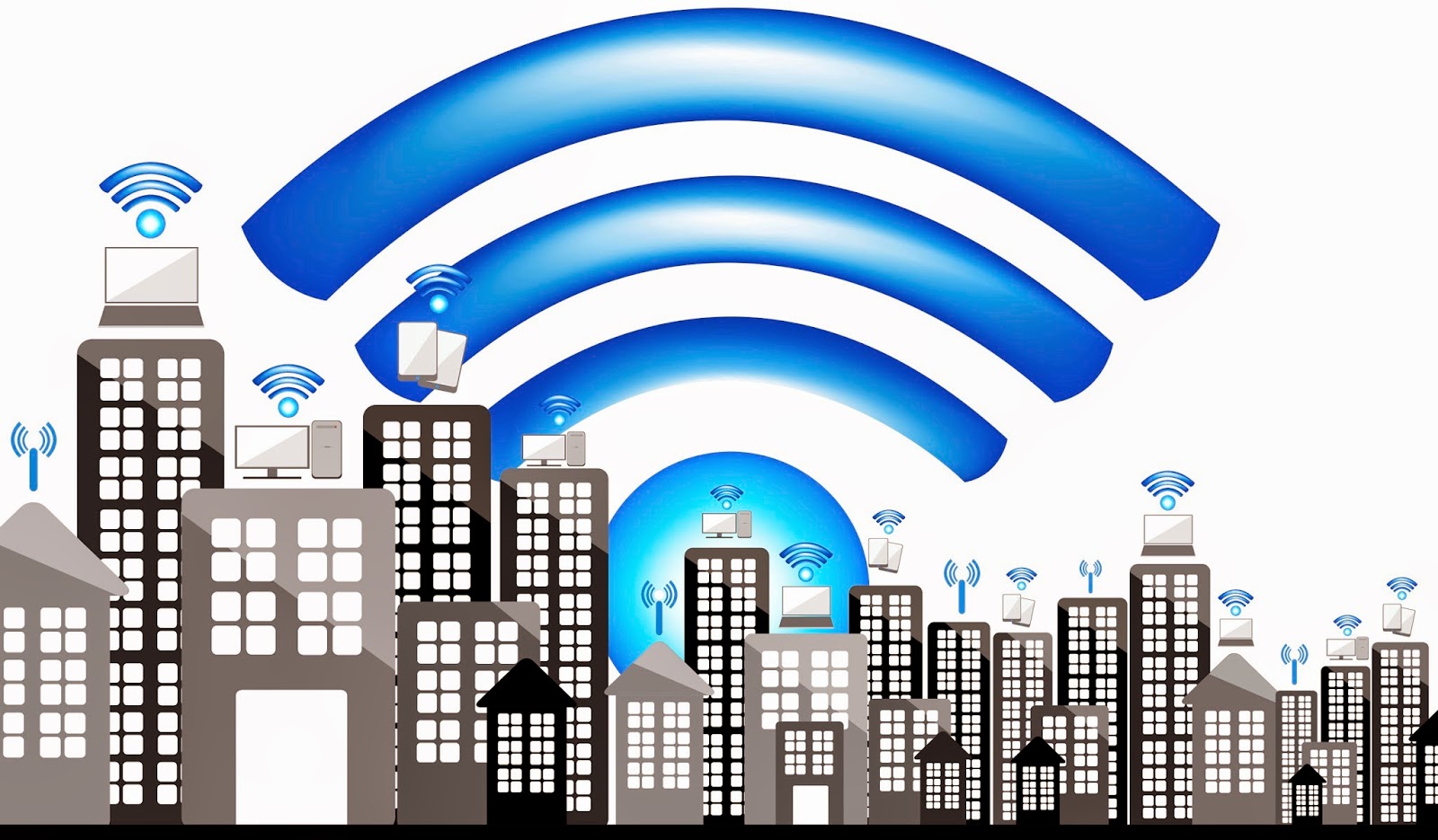
FREE Public WiFi

Benefits of a Hosted Wi-Fi Hotspot Portal

The overall benefit or goal of hosting a Wi-Fi hotspot at your location is being able to offer high-speed wireless Internet access for your customers. In addition to satisfying the needs of connectivity for your customers and visitors, you and your staff can take advantage of having a powerful media channel to reach out to your customers.
Other benefits of hosting a public Wi-Fi hotspot include:
  • Attract people to your location
  • Generate additional revenue
  • Create a private network for your own use
  • Attract People to Your Location
Hosting a Wi-Fi hotspot, in any type of business, should attract new people to your location and entice them to return and stay longer. For retail stores such as cafés and bookstores, this access helps fill empty seats. For businesses such as hotels, having Wi-Fi Internet access available for guests might be essential to prevent losing potential customers. If you are in a transportation business like buses, taxis, trains or other mobile operations having public WiFi available for you passengers is an important part of your business.
Customers find WiFi hotspots in many ways, including these:
  • Online directories
  • Software directories
  • Display signs
  • Wi-Fi finders
  • Laptop/PDAs
The best way to attract users to your hotspot is to display signs advertising that you have a hotspot at your location. These signs could simply say "Wi-Fi Hotspot Here" or "Wireless Internet Access Available."

How do you control access and  brand your WiFi Hotspots?

Each WiFi Hotspot comes with a custom home page (portal) hosted in our datacenter - which all users see when they open their web browser, and a thank-you web page - which customers will see after they successfully log in.

How Does it work?

When a user first brings up their web browser they attempt to reach some particular web page, typically their home page. The user's computer issues a DNS ("Domain Name Service") request to lookup the IP address of the specified domain. The Access Controller "re-directs" the user's session and returns the IP address of the login page on the our Captured Portal / WiFi Access Portal server. No matter what domain a user tries to go to they will be returned to the captured portal access page until the agree to terms and setup there access account.
Why not sell advertising space on these pages to local or national businesses?
Lock Media provides end to end products and services to turn your facility, bus, train, or other fixed or mobil locations into a WiFi hotspot for public wireless internet access. We take care of the end-to-end process of creating, maintaining and profiting from your WiFi hotspot. Starting with a WiFi Gateway, we can support all WiFi-enabled Laptop and PDA users. Our WiFi Gateways come complete with user authentication, subscriber billing, credit card and Prepaid Card processing, portal access branding and more!
No technical experience is required - We manage it all for you!
You can add computers or laptops, Security appliances like firewalls and content filtering solutions, Kiosk Management software, WiFi Access Points, Bridges and Repeaters, High Gain Antennas, High Power laptop wireless kit  and other WiFi solutions to expand your offering

Public WiFi Access Portal - Branded to Your Company Image

FREE Public WiFi, also called Hotspots are a convenient, easy way for your customers to use broadband internet access that is branded and controlled by your companies own messaging and terms. Using wireless technology (Wi-Fi), your customers and guests can access the internet at any of your locations. WiFi hotspots are showing up in an increasing number of places such as cafés, hotels, restaurants and retail centers around the world. And now we even have solutions for offering In-Vehicle WiFi for buses, taxi cars, trains and any other situations that requires a mobile internet connection.

The User Experience

  • Your customers will connect to the Wi-Fi signal, launch their web browser, and see your companies "Welcome Page" that asks them to log onto your Wi-Fi network by accepting the Terms of Service (TOS). This is your first opportunity to brand you WiFi Hotspot to your corporate image and offer additional information and specials offers.
  • We then have the ability to asked them to watch a short Sponsored advertisement that you can control or message in return for receiving FREE Internet access.
  • At the end of this introductory message, the users will be redirected to your "Landing Page", which will be their actual gateway to the Internet.
  • After the session ends, they will be disconnected from the Wi-Fi and asked to log in and be directed to another messaging area in order to continue.
They are free to repeat this process as many times as they like.


Visit Us : @ Hyperjet

Thursday, November 13, 2014

Navdy's transparent Head-Up Display (HUD)


A modern heads-up display (HUD) projects a great deal of what was traditionally shown on a car’s instrument panel onto the windscreen, and is becoming must-have equipment for high-end modern cars. However, as many of us don’t drive high-end expensive cars, we don’t get to take advantage of this technology. That’s where Navdy comes in. Currently in prototype form, the device promises to bring a projection display with voice and gesture controls to any car.

The Navdy prototype HUD integrates with your smartphone and your car’s instruments (accessed via the vehicle’s OBD II port) to emulate the functionality of a high-end projection display, whilst adding voice and gesture controls. To achieve this, the creators claim that the device can be paired with an iPhone (iOS 7+) or Android (4.3+) to allow any function that your phone has – such as maps, messages, and music streaming – to be accessed (or even read aloud) by Navdy.

A built-in infrared camera provides touchless gesture control so that drivers can answer a call by swiping left or dismiss it by swiping right, while the voice recognition capabilities of Siri or Google voice, depending on your phone, can also be used to initiate phone calls or to dictate texts or social media comments.
Navigation capabilities, complete with alerts and turn-by-turn directions are also provided, with the added bonus that the on-screen navigation doesn't vanish when a call comes in. Instead the navigation continues whilst the conversation takes place, allowing you to talk to someone without getting lost.


The Navdy team says their device will also display information, such as speed, RPM, distance-to-empty, fuel economy, tire-pressure warning or battery-voltage warning, all from the car’s computer, provided that your car is built after 1996 and has an OBD II port – and you plug it into it.

Boasting a dual core processor running Android 4.4, a 5.1 in (12.9 cm) wide display, an accelerometer, e-compass, ambient light sensor, Wi-Fi (802.11 b/g/n), Bluetooth 4.0/LE, along with audio out via Bluetooth or 3.5 mm jack, a mini-USB port, and an Internal speaker and microphone, the Navdy certainly appears to be prepped with all the features to meet its claimed capabilities.

Of course, there are other aftermarket HUD devices out there – the Garmin HUD being one notable example – and many smartphone apps allow speed and navigation details to be projected onto the windscreen. But the Navdy aims to produce a unit that is more integrated into a vehicle by accessing a cars on-board computer and by providing a single hub to access all smartphone-connected features without all of the messy compromises generally required for in-car add-on equipment.

Slated for shipping in early 2015, Navdy is now available to pre-order at a discounted price of US$299 for the next 30 days, before reverting to its regular price of US$499.


Visit Us : @ Hyperjet


Monday, November 10, 2014

Wi-Fi Security for Public Networks


Introduction
 
Wi-Fi hotspots present a unique set of security problems, quite different from the security issues involved in home and office networks. These hotspots have unknown computers accessing them. And in this case, the very nature of a public hotspot demands that it broadcasts its SSID. A public hotspot also has to do away with encryption and MAC address filtering to enable hassle free access to all users. 

Even if a public hotspot used encryption and user verification, it is not possible to tell which customer accesses the network with a malicious intent.
Under these circumstances, the precautions have to come from the users who access a WiFi public hotspot. Here are a few things you can do to protect yourself while using a public hotspot. 

1. Use legitimate access points

This is an often overlooked, nevertheless important safety step. Malicious access points that connect to hijackers’ databases have started coming up everywhere. These have the same SSID as a legitimate access point. The malicious ones can collect such information as your usernames, passwords and even credit card data of people who sign up for new services. 

Steer clear of anything that doesn’t look as coming from a legitimate provider. Also check the list of all legitimate SSIDs in any given area. Avoid setting the wireless card in your gadgets to automatically connect with any available network. Turn off peer-to-peer mode when you are in a public place to avoid others connecting directly to you, and last but not the least, keep your WiFi card in the off position when you don’t use it! 

2. Encrypt your sensitive files
 
Emails, usernames and passwords and virtually anything you beam from your device to the access point can be intercepted by someone close by. A lot of this information is going as clear text and not in a converted format, making it possible for the interceptor to access your information. Therefore encrypt any sensitive information you send via email from a public hotspot. There are numerous file encryption programs, freeware and shareware to help you with this.

3. Use a VPN
 
A VPN or virtual private network creates a tunnel between your device and the hotspot, thus preventing anyone in between from intercepting your data. This has become a standard requirement for companies to allow remote employees to connect to their networks. If your company does not provide you with a corporate VPN, you can go for a commercial one like JiWire SpotLock. 

4. Set up a personal firewall
 
Connecting to a public wireless network implies that you are joining a local network of unknown computers. These are on the same IP subnet, so it is easier for them to capture the traffic between your computer and the hotspot. Therefore always install a personal firewall program to protect your personal laptop. In the case of a corporate device, consult the IT manager before installing any firewall. 

5. Install and regularly update your anti-virus software
 
Public networks are places where your machine is the most vulnerable to attacks from viruses and other malicious code. It is more important here to have effective antivirus software in your system. Also take care to visit the vendor’s website and download the latest update, or avail the auto-update features. 

6. Update your OS
 
Most large utility and business software vendors like Microsoft and Apple frequently develop additional security patches for their operating system and programs. In the case of Microsoft Windows, you can visit the Windows Update site to get the new patches. In the case of Mac OS, enable the automatic Software Update feature in System Preferences.
Also be wary of the attachments that come with emails, as most of the recent viruses and worms have spread through them. 

7. Ensure privacy
 
Take care while you are typing information like name and password while you are at a public hotspot. There are people around you. 

8. Use Web-based email instead of Outlook
 
Avoid sending emails through Outlook, Eudora or Apple Mail when you’re using a public hotspot. Always use web-based email that uses secure http. 

9. Disable file sharing

You may be using file sharing while you are using your home or office network. Make sure that this feature is turned off before you access a public hotspot, for obvious reasons. 

10. Protect your confidential files with strong passwords
 
Use a strong password for access to your computer and a separate password to protect sensitive files. It would be a good idea to back up this with your most important data stored in an encrypted keychain storage device. 


Visit Us : @ Hyperjet

Monday, October 27, 2014

Biggest Technology Changes to Come in Next Decade


In relation to describe here the biggest technology changes to come in next decade we must perceive the indications in the tech changes of our time and in past decades. Within just two consecutive decades before or after the dawn of the new millennium we experienced the biggest array of changes in the field of technology and tech interfaces of everyday life. These changes have been so gigantic and far reaching in effect that twenty first century modern life experienced the greatest transformation in the hands of technology itself. Among the wide array of changes that are taking place and are continuing to make the use of technology shift in more ways than ever some of the most prominent ones are particularly from the computing world, in delivery framework, devices, communication and collaboration channels, consumer interfaces and mobile computing based applications. While some of these gigantic changes like the increasing replacement of traditional computers and computing by the mobile devices are widespread and all sorts of applications are increasingly penetrating into our different lifestyle fields, in the time to come it is only going to be more rigorous to blur the separation between lucid computing maneuvers and solid material reality. Here are our picks on biggest technology changes to come in next decade.
  1. Implications of Biotechnology
Biotechnology is already considered as the most promising field of healthcare and with gigantic research output that is further going to be irreplaceable for the treatment of many health disorders and for organic transplantations. Bionic limbs are already in place which is only going to develop in sophistication and maneuverability in the time to come. If bionic limb is one aspect, then stem cell research and incorporating stem cell replacement is another aspect that is going to take the implications of technology in healthcare further. With stem cell therapy a great array of challenging diseases in which cell level degeneration plays an important part can be successfully thwarted. Biotechnology and the array of biotech discoveries are going to present one of the revolutionary areas of biggest technology changes to come in next decade.
  1. Big Data Analysis
With the proliferation of mobile computing to an astounding level the volume of data has reached to a gigantic limit and it is really amazing that more than 80% of data was created only in the past two years. This huge body of data comprising every computing communication, mails, social networking posts, videos and everything you share, save and put into use on the computer is accumulatively called Big Data which is increasingly being the subject of analytical purposes of various ends. Big Data analysis is the next big area of importance for assessment, discovering opportunity and analyzing potential. Though already the analytical use of Big Data is in place particularly for assessing consumer behavior and business potential in key rigorous sectors like retail, in the decade to come it is going to change the face of business analysis to the ultimate extent.
  1. Cloud computing will be the driving force
Cloud storage and cloud computing is already a big force since the proliferation of mobile devices that are continuing to replace the traditional mode of computing. Especially as mobile applications and lucid non-device specific interactions are increasingly becoming the order of the day, it is more or less obvious that cloud computing in the coming decade would replace traditional computing. Thanks to cloud based applications and storage now you can access your data, do computing work, process information, share, mail, interact from anywhere irrespective of the devices and locations. With mobile computing in handheld devices fast replacing the traditional client side storage solutions and servers and device specific operation systems, the trend in few years time is only going to make a clean sweep creating access to data and computing.
  1. Speedier communication network will make the world even smaller
Just think of the irony of the reality :- a tsunami in Japan has been sensitized faster through Facebook even before government agencies could signal high alert! Yes social networking made the world really a cozy place to live and in the time to come it is going to be even cozier. Some of the biggest technology changes to come in next decade will be experienced in social networking with ideas, information and entertaining content being shared in real time with more fluid pace making the world a smart place to interact where so called geographical barriers will not have any meaning except for cultural reference.
  1. Digital literacy is going to replace academic literacy
One thing is already evident, that education and especially literacy is no longer going to be the same after the proliferation of handheld devices and technologies to a mass level. In coherence with this trend digital literacy is going to outpace even the common literacy and introduction to education for the coming generation of children and adolescents. In the years to come education aspirants will be more conversant and equipped with digital knowledge of information processing and handling devices than earlier times thanks to especially the wide range of small handheld digital devices with internet which are fast replacing the books as source of knowledge.
  1. Solar powered cities
Energy is the greatest ever concern for our civilization with all sources of energy fast going to exhaust and as the demand for the electricity and energy is ever increasing thanks to our hi-tech life and lifestyle gadgets, solar power is increasingly being viewed as the next big alternative to play a big role in creating sustainable source of energy while causing least damage to the environment. Completely solar powered cities are being viewed as one of the biggest technology changes to come in next decade. Already a great number of cities have started to adopt the solar power to use in the local level and it is being viewed as clear indication to completely solar powered cities of future.
  1. Revolving and Intelligent Architecture
Dynamic architecture or rotating architecture or revolving architecture or smart architecture, in whatever way you call them they are the new dimensions in the architectural design of our time which is just going to change the way we think of a building and correspond to its utility and aesthetics. A building floor that rotates or the twisting of the building to various dimensions to intelligent self regulating interior temperature and lighting, modern architecture has come up with an array of smartest way of corresponding to our sense of utilization of architecture and building structures which are only going to be more developed and widespread within the coming decade.
  1. More interactive, multimedia based education
When e-learning was unearthed for the first time it was seen widely as a leap towards the digitization of education but ever since in every way the education system became more interactive, hi-tech and dependent on real time input through vast digital network. Most important of all with the reading technologies like electronic books, applications on the mobile devices being widespread on everyone's hand, education is no more about getting the knowledge and pouring them on papers but it is more about real time intelligence use, practice and sharing through being involved on the subject on a vast network using digital technology and devices. From taking notes to presentation to problem solving to career focused learning to professional exposure, in the digital space of education you do not need to wait for anything, because through a rewarding network of students and professionals study goes hand in hand with professional exposure.
  1. Virtual, lucid, mobile simulation of many things
Everything is destined to go mobile as we are increasingly becoming dependent on our handheld devices for all our living needs, from shopping to education to contacting family doctors to getting the baby from the play school to self organizing to booking flight tickets. Tiny light applications on your 6 inch screen on hand take care of your different purposes and utilities just round the clock. You require a dieting information instantly just when you are cooking or need to know the traffic condition to calculate the time before you venture to go somewhere at the end of the day, you do not need to ask anyone or call any god dam service to know these, there are applications for every bit of your requirement. Lucid, simulated experience of mobile applications is encompassing every area of life at fastest speed and is one of the biggest technology changes to come in next decade.
  1. Remotely controlled healthcare
Remotely controlled healthcare services using digital technology, devices and applications is already in use in a big way which is only going to be the mainstream of healthcare in the time to come. With the development and proliferation of remote sensing and remote control technology that can share the medical data and media in the real time to make specialists and practitioners involved from various remote places, remotely controlled healthcare is going to be the order of the day in the coming decade elevating the standard and efficacy of healthcare practice to several notches.


Visit Us : @ Hyperjet


Popular Posts

Recent Posts

Text Widget